
Professional applications — International
In Trois-Rivières, a drone paints Hydro-Québec's high-voltage lines
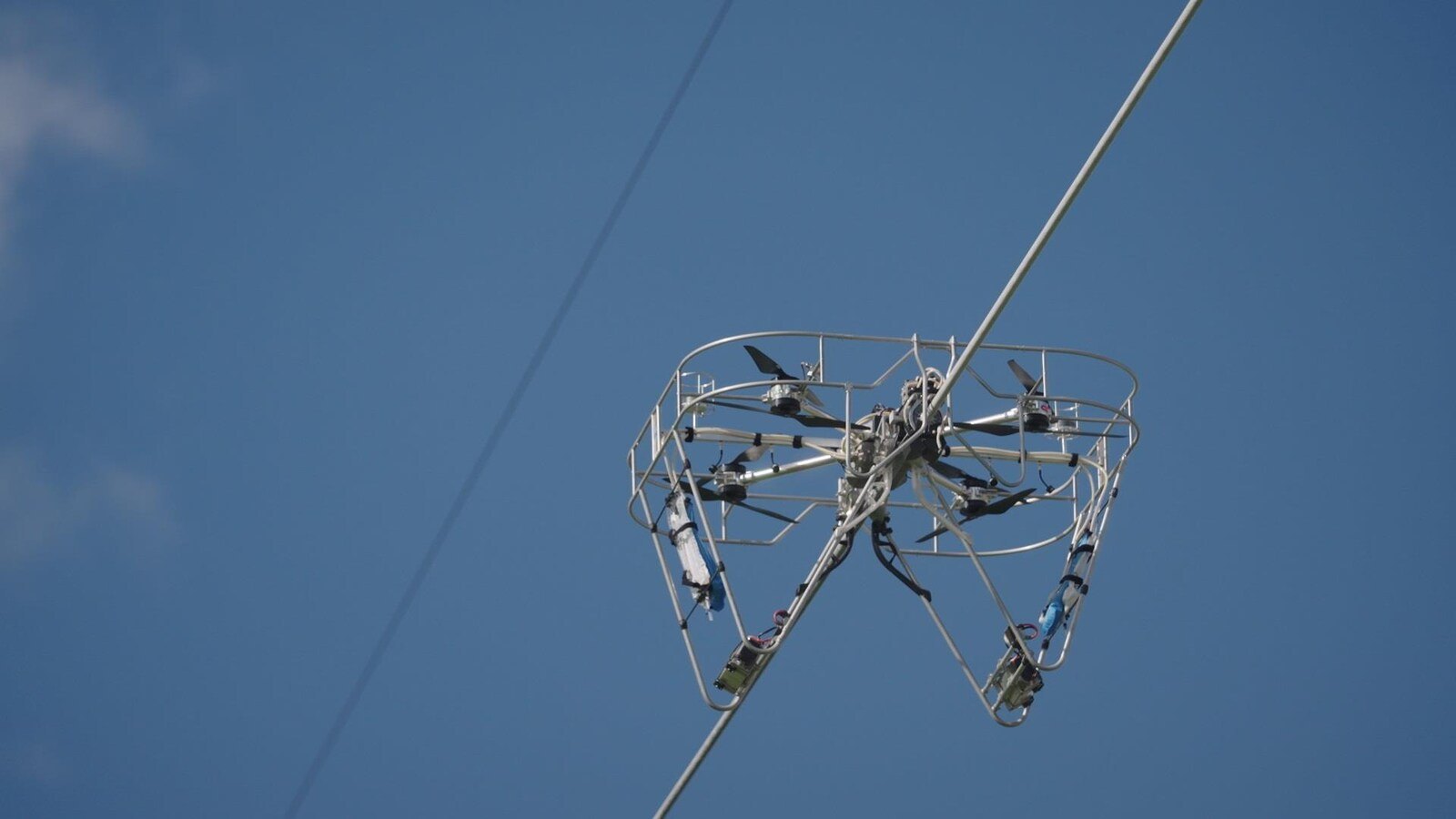
Drone lands on conductor and applies white coating
The drone balances on a high-voltage conductor and applies a white coating to it, without interrupting the flow of current. Hydro-Québec is running this pilot project in Trois-Rivières, announced in late October 2026 and presented by the company as a world first. Development took more than two years of work at Hydro-Québec's research institute (IREQ). A ground team guides the aircraft and ensures safety under the lines during operations.
Hydro-Québec does not aim to paint the entire network. The company presents the operation as a way of having several options to maximise the current capacity of the network.
Summer sag of conductors
The problem targeted is the summer sag of conductors. On certain hot days, the wires reach 50 to 60 degrees Celsius, stretch and come closer to the ground. Hydro-Québec must then reduce the amount of electricity flowing through certain lines to maintain a safe distance from the ground and limit public exposure to electric fields.
Nicolas Pouliot, senior researcher at IREQ, describes a phenomenon still little known among the population. The constraint is all the greater because summer demand is rising faster than winter demand, forcing the company to adapt its infrastructure to support peaks in the middle of the hot season.
The white coating is intended to reduce the impact of heat on the network in summer. If the project meets expectations, Hydro-Québec estimates it can increase the amount of energy transported in certain places by around 30%. The figure remains conditional: it depends on the results of the pilot.
Characteristics of the drone and the coating
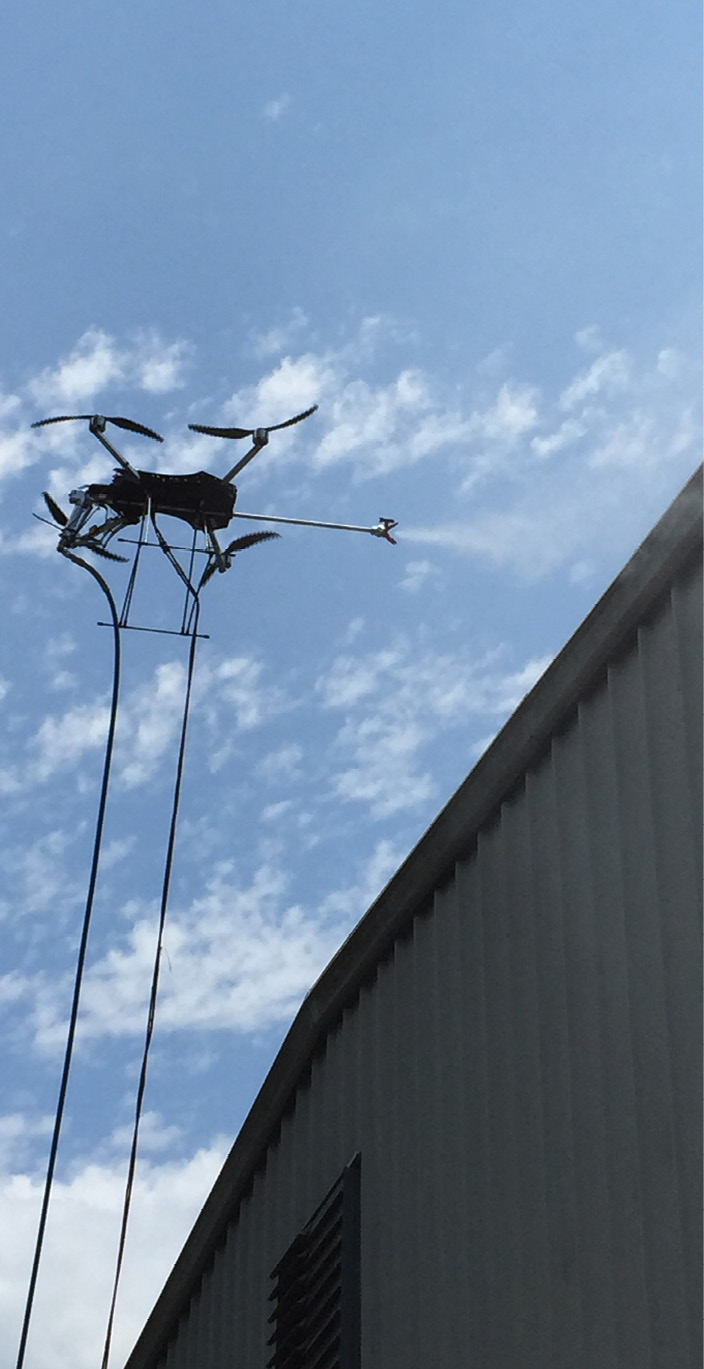
Hydro-Québec does not name any drone model and publishes no data on endurance, payload, type of coating or the method of holding on the conductor. The drone balances on the wire, but the system that stabilises it and the way the coating is deposited are not specified.
The duration of an intervention, the throughput in metres painted per hour and the behaviour of the coating over time are not specified either. These elements determine the economics of the operation compared with a conventional human intervention.
A robotics sector already established at Hydro-Québec
The painting drone comes after robotics work already long established at Hydro-Québec. On 11 March 2020, the company and DRONE VOLT signed a memorandum of understanding aimed at the industrialisation and exclusive commercialisation of a drone for inspecting high-voltage transmission lines. This aircraft takes precise measurements on live lines using sensors developed by IREQ teams, without interrupting electricity service. Jean Matte, senior director of Hydro-Québec's research centre, said at the time that this technology had been tested on the company's equipment for several years.
DRONE VOLT is a French manufacturer founded in 2011 and listed on Euronext Growth. It has operations in particular in France, Benelux, Canada and the United States. It generated revenue of €7.1 million in 2019, unaudited data. The painting drone, created at IREQ, is now marketed by a French company. The link with DRONE VOLT remains plausible given the history, but has not been established.
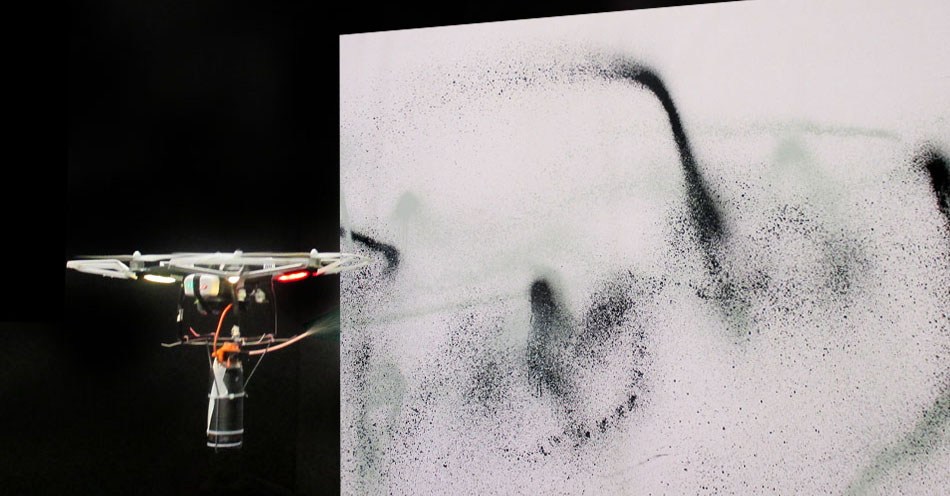
Painting by drone is not new in itself. In 2014, artist KATSU presented canvases made with drones equipped with spray paint, with deliberately imprecise results: the downdraught from the propellers deflected the paint and the weight of the can destabilised the aircraft. On the industrial side, the American company Apellix, formed in 2014 by Robert Dahlstrom, develops painting drones for buildings, ships and structures, with an umbilical cord connecting the aircraft to a ground station that carries the paint tank, compressor and power supply. The Hydro-Québec case stands out on one point: direct contact with a live conductor. Other systems spray a static surface from a distance. Here, the aircraft must land on the wire, remain stable there and deposit the coating.
Constraints for network operators
For network operators, in Europe as in Quebec, drone use remains targeted. Hydro-Québec explicitly rules out painting all lines and presents the technique as one option among others to gain capacity without building new infrastructure. The operation mobilises a ground team dedicated to piloting the drone and to safety under the lines, making it a planned intervention, not an isolated flight. The value is measured in recovered network capacity, with a potential gain of 30% on targeted sections if the pilot confirms expectations.
The regulatory frameworks applicable to this type of flight, in Quebec as in the European Union, are not specified. No European deployment is announced at this stage. For a European network operator, the Trois-Rivières demonstration above all shows that a drone can work in contact with a live conductor, where a human intervention requires specific procedures.
← Back to home · Search · Suggest a topic · Lire en français / Read in French