
Regulation — EU
Zipline announces 68% less noise exposure per flight, based on internal model
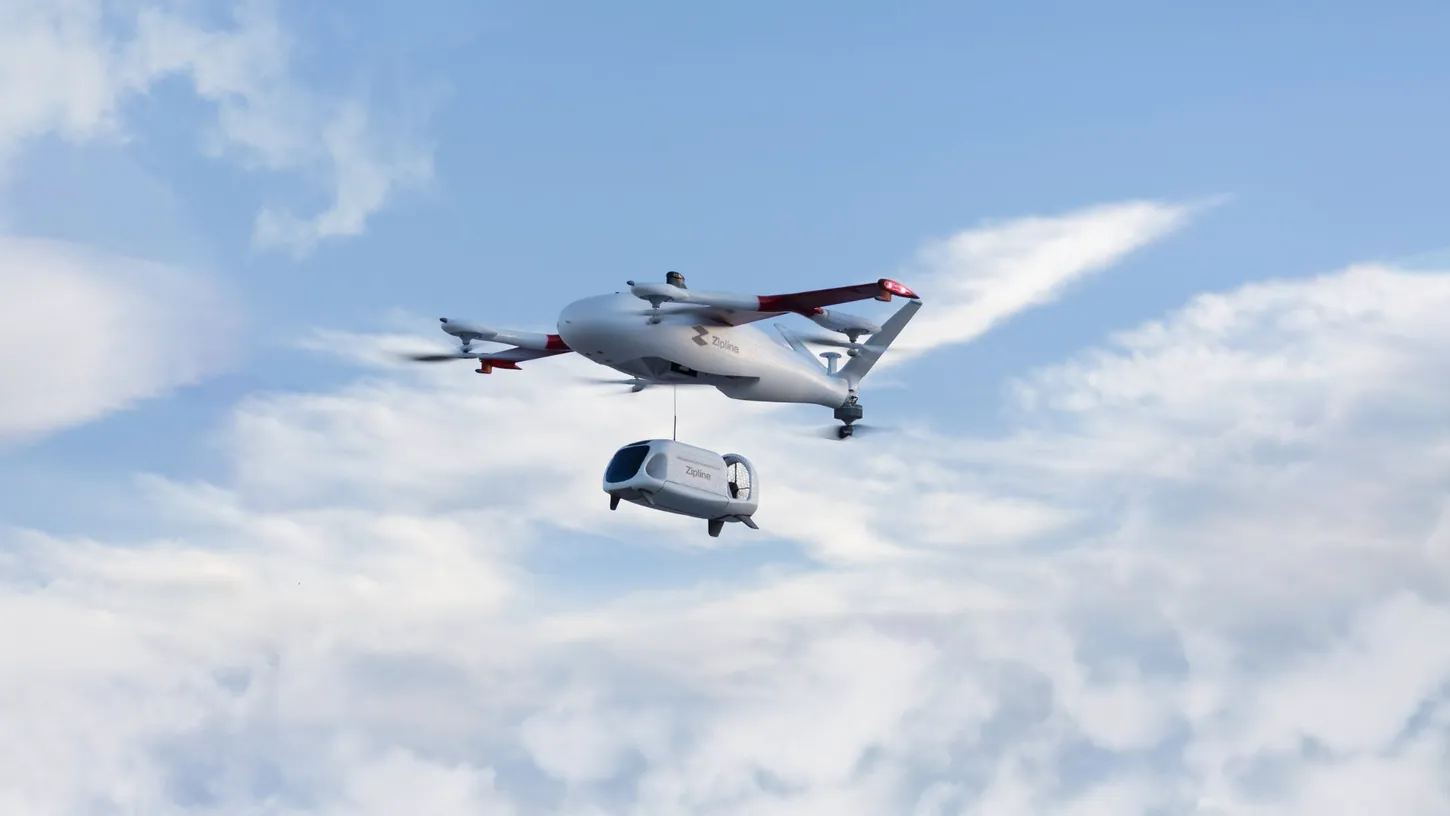
A flight profile calculated on board according to wind

Zipline is deploying across its entire fleet a flight profile that measures wind at take-off and chooses the least noisy trajectory to get onto the wing and back again.
The announcement is dated 27 October 2026. The Platform 2 aircraft takes off vertically with its five propellers, transitions to a fixed wing and cruises on a single motor. Switching from one mode to the other concentrates noise and battery expenditure. The new procedure makes the aircraft pitch down to gain speed, then pitch up to lose that speed without braking with the motor. Zipline compares the first movement to a bicycle going down a slope. The company says the aircraft spends about 50% more time on the wing per flight. The same change shortens the average flight by 53 seconds and reduces energy consumption by 21%. Zipline calls this technique sound-optimized dynamic flying and states that it already enables deliveries at higher altitude and prepares for more complex manoeuvres.
An update for the existing fleet, without a country-by-country timetable
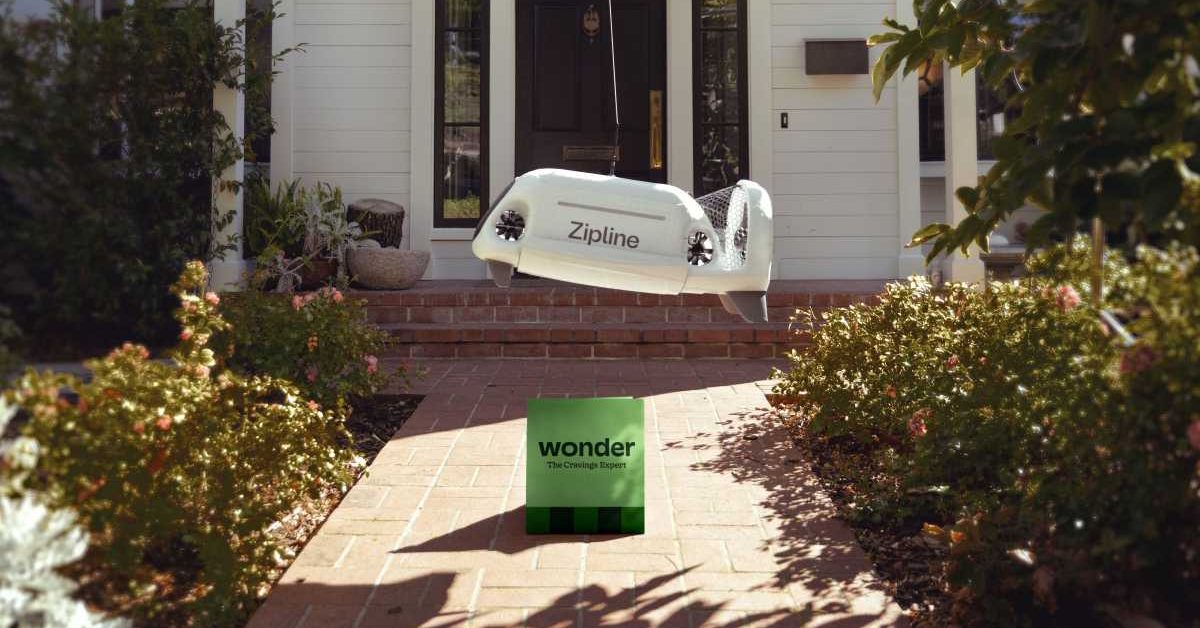
Zipline states that every drone in its fleet now flies with this profile. The comparison is with the 2025 fleet, which places the migration within a generation already in service, not in a new aircraft. The company does not detail the models concerned beyond Platform 2, nor the countries where the update is active, nor any hardware limitations. It also does not publish a price, a commercial availability date or operational feedback on the new profile. In 2023, before the commercial use of Platform 2, Zipline said it expected more than 10,000 test flights with 100 Zips. This volume gives an order of magnitude for the tests required, not a review of the 2026 deployment.
68% and 24% derived from a model, not from a sound-level meter
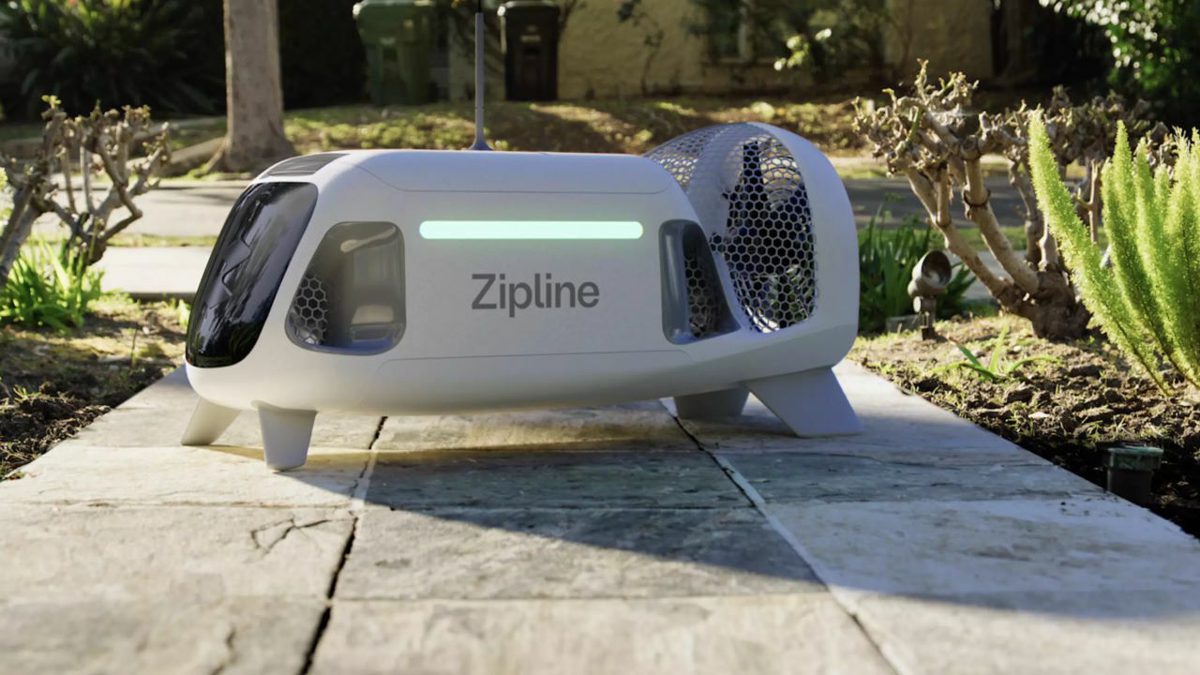
Zipline announces a 68% reduction in noise exposure per flight and a 24% reduction in peak noise compared with its 2025 fleet. These two figures combine the software update and other hardware and software changes; the company does not say what share is attributable to the flight profile alone. It specifies that they are “based on internal modelling”. No ground measurement in decibels is published for the new profile. The technical data sheet therefore gives no absolute level, nor measurement distance, nor calculation method.
On 25 March 2026, Zipline had already stated that its aircraft are six times quieter in delivery than others in the industry, and that a recent software update had reduced perceived noise by 30%. In the same note, the company said it had exceeded 2 million commercial deliveries. It plans to raise its cruising altitude to 400 feet (122 m). It also states that its two-part architecture keeps the aircraft at around 330 feet (100 m) during a delivery, compared with 32 feet (10 m) on average for other drone delivery services. The comparison is its own and names no competitor.
What is missing for a local corridor application
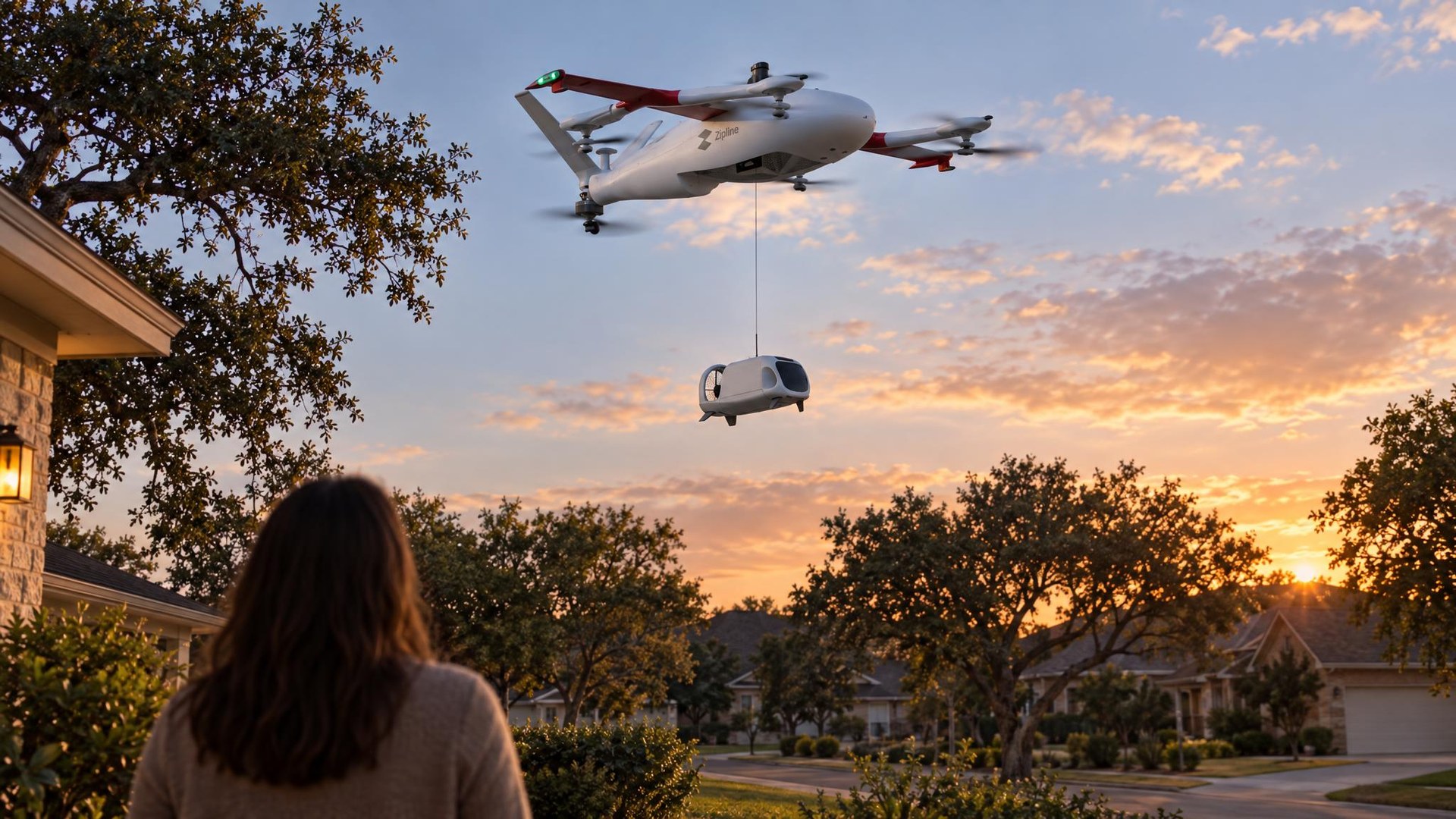
For an operator, Zipline's figure is not enough to complete a corridor application. In Europe, as of 28 October 2026, local noise rules determine the acceptance of delivery corridors. Independent measurements, levels at comparable distances and feedback from several sites are missing. Price, availability and field feedback are not published. In Austin, where Zipline launched First Flight on 9 October 2026, TomTom recorded in 2025 a 10 km journey in 14 min 49 s on average, 30 s more than in 2024, and 21 min 26 s at the evening peak at 28 km/h. Average city-centre congestion reached 40.5%, 1.4 points more than in 2024, with 60 hours lost, 5 h 06 more. These data describe road traffic, not drone noise.
In the United States, the benchmarks available as of 28 October 2026 for Chicago cite an MK30 cruising at 63.7 dBA SEL measured at 200 feet (61 m). The Baton Rouge dossier uses 92 decibels for Amazon, a figure absent from the company's marketing. These benchmarks do not set a European ceiling. The Federal Aviation Administration (FAA), the American authority, whose rules do not apply in Europe, provides no threshold transposable to European corridors. Independent measurements will remain necessary to convince residents and local authorities. At this stage, the 68% figure remains a model output.
← Back to home · Search · Suggest a topic · Lire en français / Read in French